
Elastography (elastometry), a modern liver examination method, allows for an accurate assessment of the organ's condition in just a few minutes, without any cuts or punctures. I, hepatologist Dr. Konul Mahmudova, perform this examination using next-generation equipment in our clinic.
What are the main advantages of elastography?
This method, which we use in our clinic, is based on the latest software applied in Europe and has many advantages:
- Applicable to all age and weight groups.
- No special preparation is required for the examination, though coming on an empty stomach is recommended.
- Performed painlessly and non-traumatically, without breaking the skin barrier.
- Being a harmless method, it can be repeated multiple times if necessary.
- The examination time is short (takes 5-15 minutes).
- It has no contraindications and is affordably priced.
How does it differ from FibroScan and ultrasound?
Unlike the standard FibroScan method used in Azerbaijan, the elastography we use is not a blind method. During this examination, we see the liver on the screen and can perform diagnostics in any desired area and segment. Standard ultrasound, unfortunately, cannot fully determine the degree of fibrosis.
Thanks to this method, we achieve results with 96% accuracy without the need for a biopsy. For example, even in patients whose blood test results such as ALT, AST, and bilirubin are normal, but whose platelets are low, we can accurately determine liver damage and the degree of fibrosis (Fibrosis grade 1, 2, 3, or 4) using elastography.
How is the elastometry examination performed?
The patient lies down just like during an ultrasound. During the examination, holding your breath for just 5 seconds is enough. Accurate information about the condition of the liver is obtained in a short time, without any pain or discomfort.
How are the stages of liver fibrosis determined?
Liver fibrosis is measured in kilopascals and divided into four stages. Through modern elastometry technology, we must clarify the fibrotic process taking place in the liver. If we investigate and diagnose the fibrotic process—or in everyday terms, the hardening in the liver—in a timely manner, of course, it is much better.
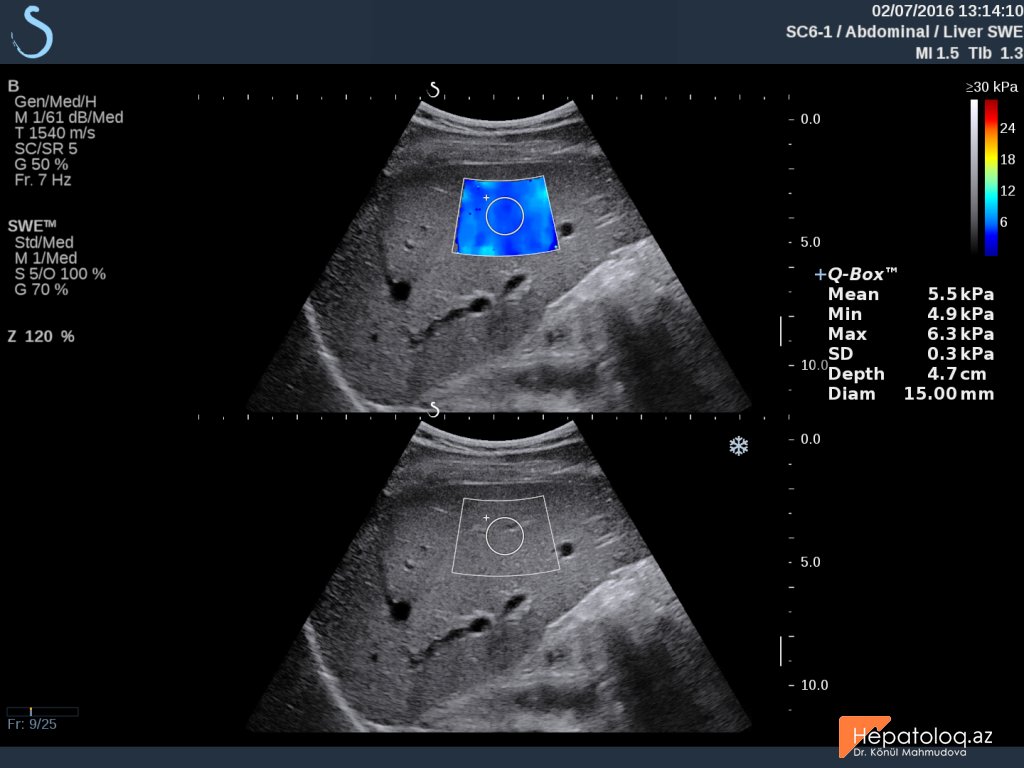
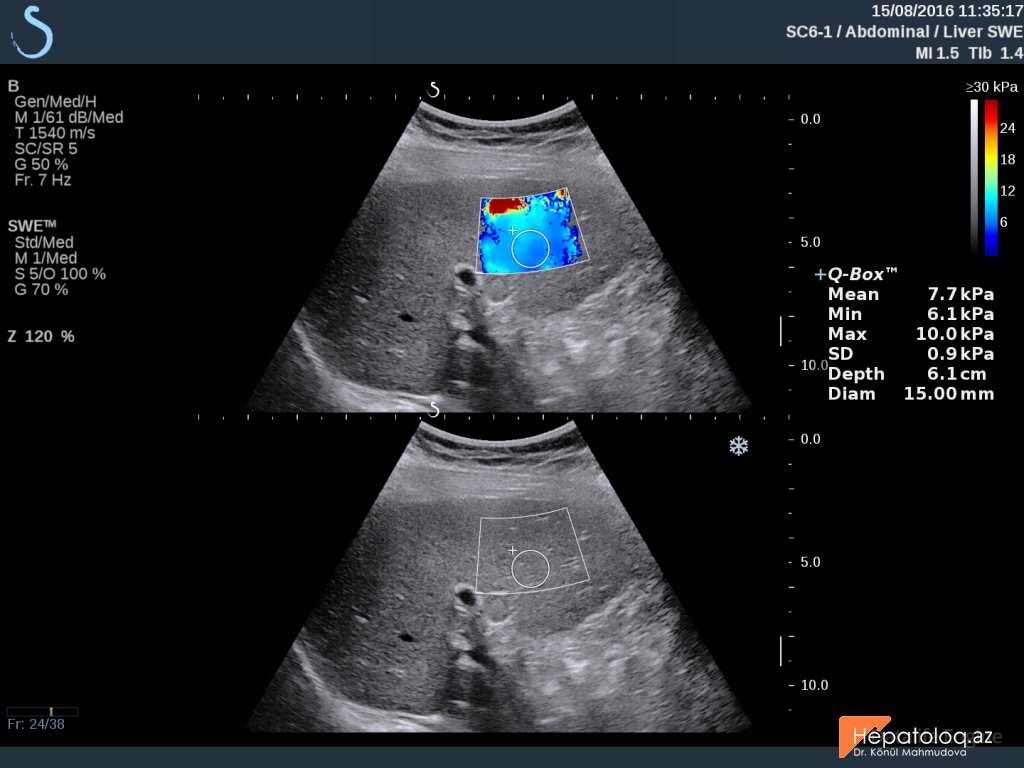
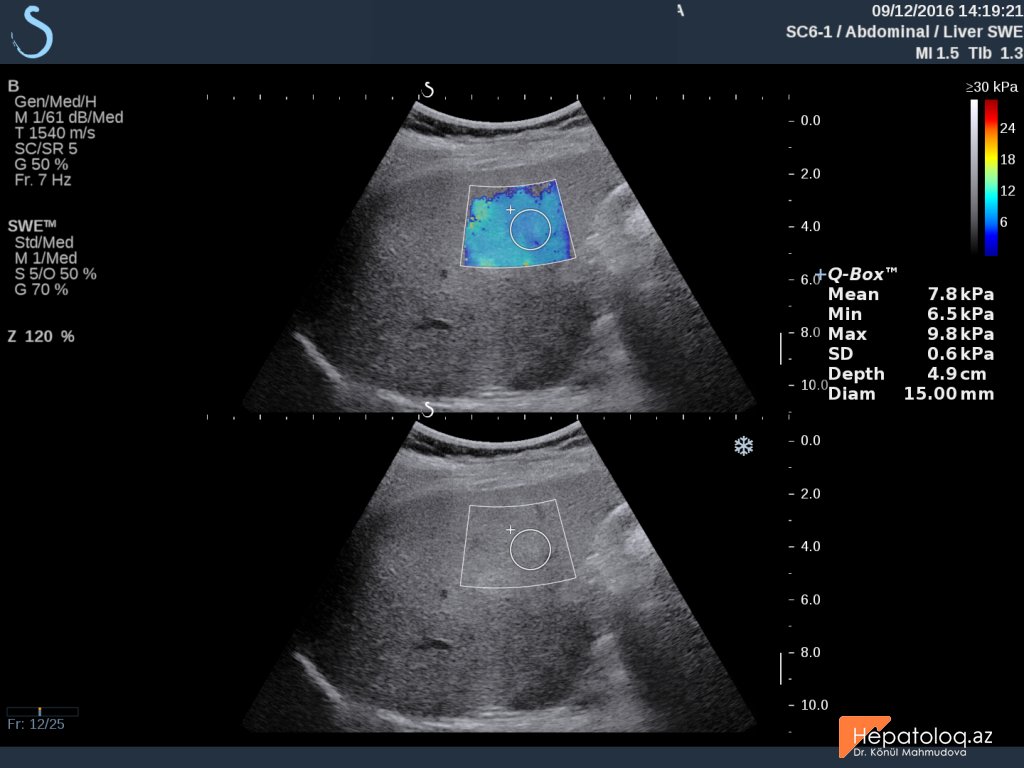
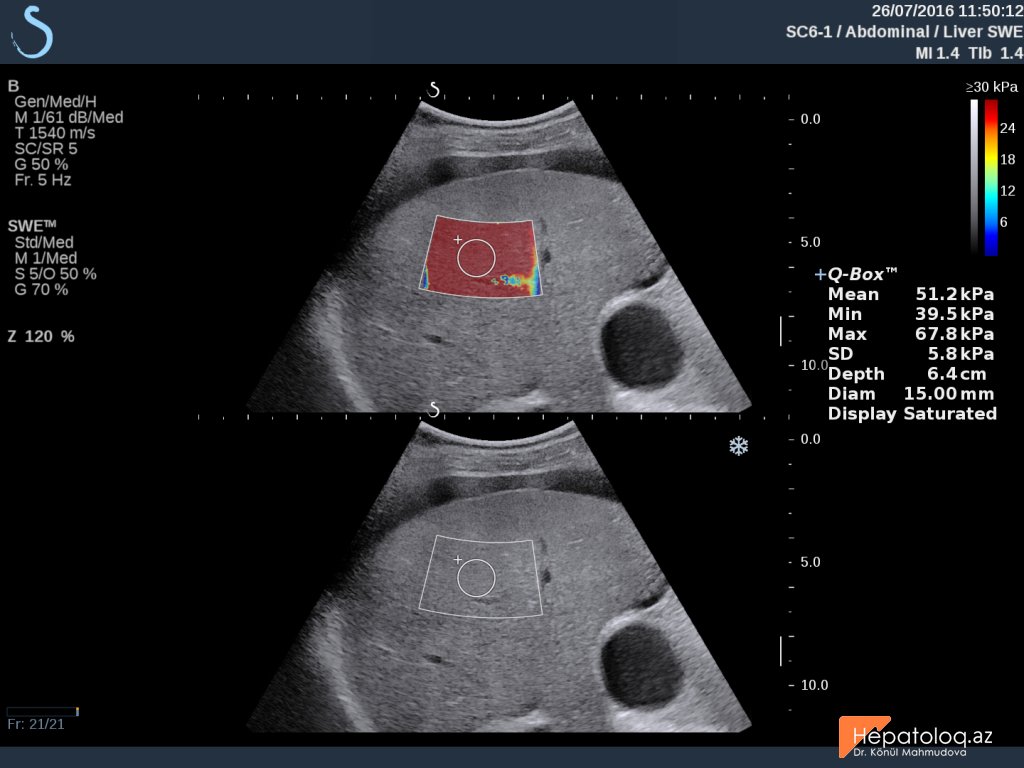
How does elastography penetrate into the deep layers of the liver?
The incision-free examination we perform with the elastography device penetrates into the deep layers of the liver, clarifying the processes occurring there without any pain or cuts. With the elastography device, we penetrate into the deep layers of the liver and clarify the processes taking place there. At this time, the device allows us to penetrate 4-5 cm into the liver, and sometimes up to 6 cm in lean patients.
No pain is felt during this examination. Our advantage is that during the process:
- There is no pain at all;
- No incisions are made or used;
- No instruments are used.
We only use this device to clarify the process taking place in our liver.
How do we detect changes and fatty liver disease?
We detect changes in the liver most accurately using the elastography device, and this modern examination method helps identify changes occurring in the liver at earlier stages. Elastography has a huge impact and great importance in differentiating fatty liver, i.e., determining whether a patient has fibrosis. Fatty liver can also coexist with fibrosis, and there is perhaps no alternative method to elastometry for making this differentiation.
To identify changes in the liver, ultrasound examination is usually the first step. However, ultrasound only describes the coarsest changes in the liver. We need to diagnose the liver at earlier stages, up to the fourth stage. For this, the most modern method at our disposal is the elastography (elastometry) device. Using this device, we make a diagnosis and clearly reveal changes in the liver by examining the patient every six months and providing treatment.